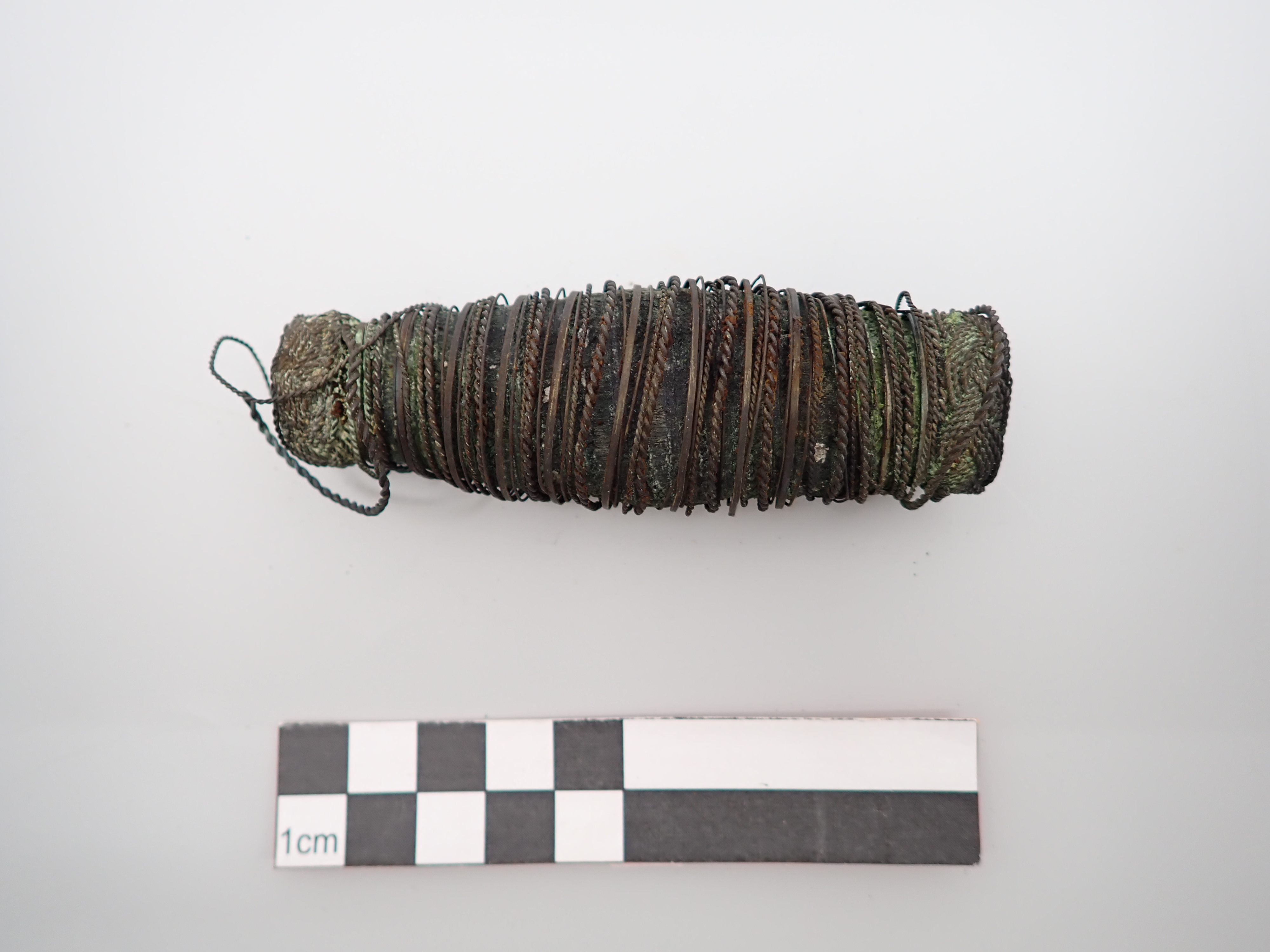
Sword grip NG-1980-27-H-693
Amelia. Hammond (The Mariners' Museum and Park, Newport News, Virginia, United States)
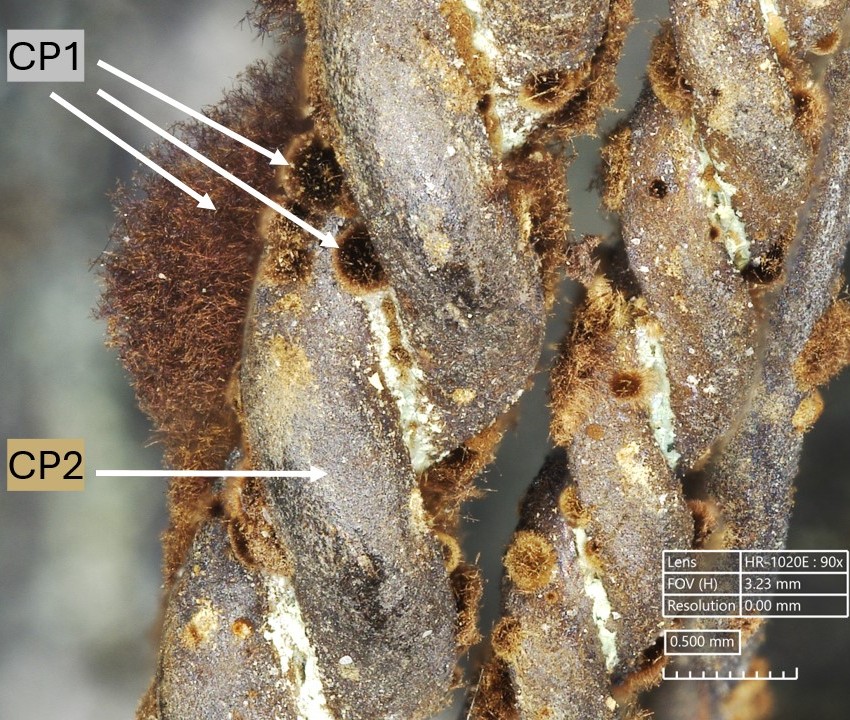
This object is a sword grip, a composite object made from a wooden core with embedded leaded brass wire recovered from Hollandia, a Dutch East India Company ship. The wire is loose in some areas, and deeply embedded in others, with some periodic breakage throughout the piece. Some wire is twisted, and some is flattened. The wire presents locally black spots, brown fuzzies.
Sword
Hollandia, Isles of Scilly, England, United Kingdom
Excavated between 1971 and 1980
18th Century
Dutch golden age
Maritime
Rijksmuseum, Amsterdam, North Holland
Rijksmuseum, Amsterdam, North Holland
NG-1980-27-H-693
Likely treated in 1980 with BTA, and potentially treated in England prior, treatment unknown (Hammond and Davidowitz 2025 [1], 2025[2]).
The Rijksmuseum in Amsterdam contains thousands of finds from nine different Dutch East India Company (Vereenigde Oostindische Compagnie) shipwrecks, many originating from the Hollandia, wrecked off the Isles of Scilly in the United Kingdom in 1743 (Gawronski 1998 [3]). The wreck was located in 1971 and excavated between then and the early 1980s (Gawronski 1998[3]). There are 1477 cupreous objects in the Rijksmuseum’s Hollandia collection, in varying states of corrosion.
This object was analyzed as a componant of the VITAl Cu project, a study that was initiated to help develop a conservation strategy for objects from Hollandia, which were moved to a new storage facility in 2020, CollectieCentrum Nederland, with improved climate conditions. Accurately monitoring the stability of the collection required an understanding of how active the corrosion processes are. The collection also shows clear signs of having undergone treatment (efflorescence, stripped surfaces, coatings) but has since become dissociated from much of its conservation documentation.
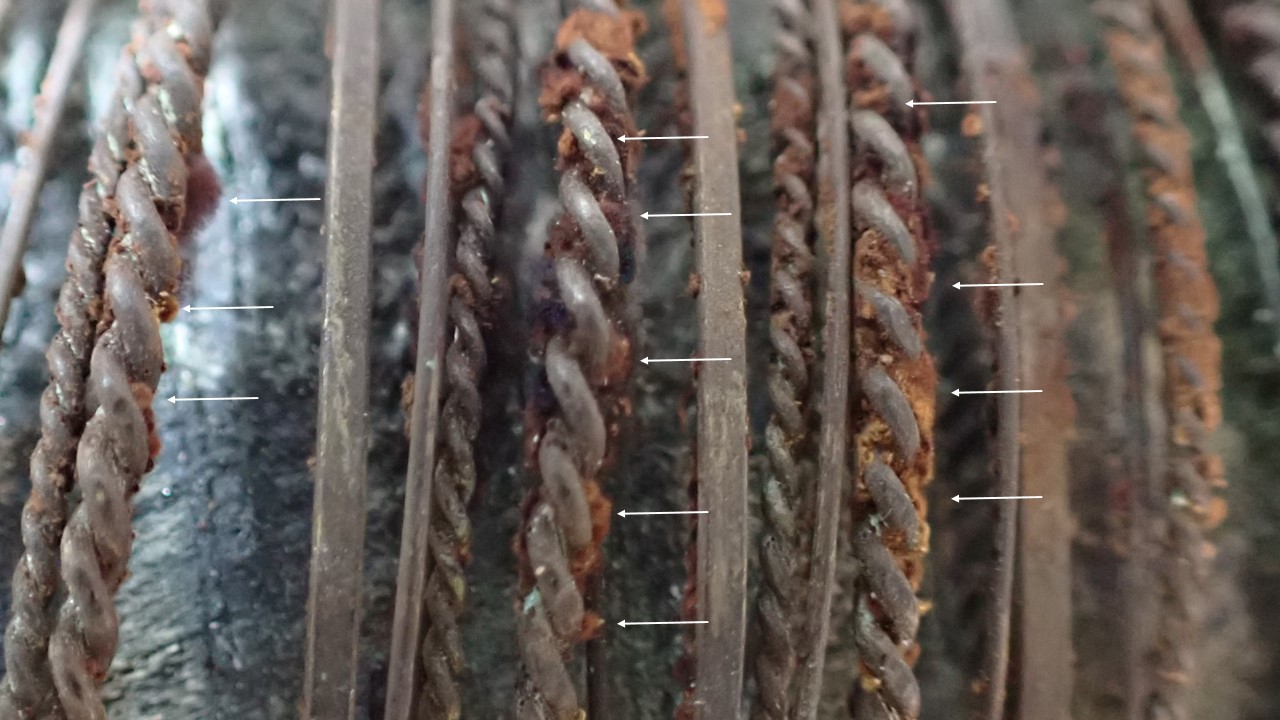 Credit Rijksmuseum Amsterdam, A.Hammond.
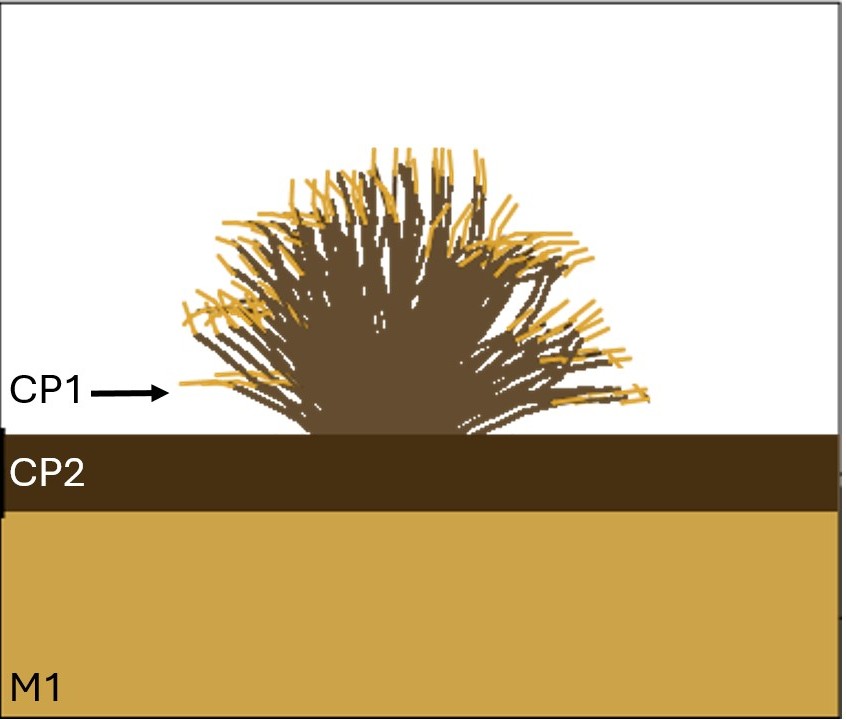
The schematic representation below gives an overview of the corrosion structure(s) encountered on the sword grip from a first visual macroscopic observation.
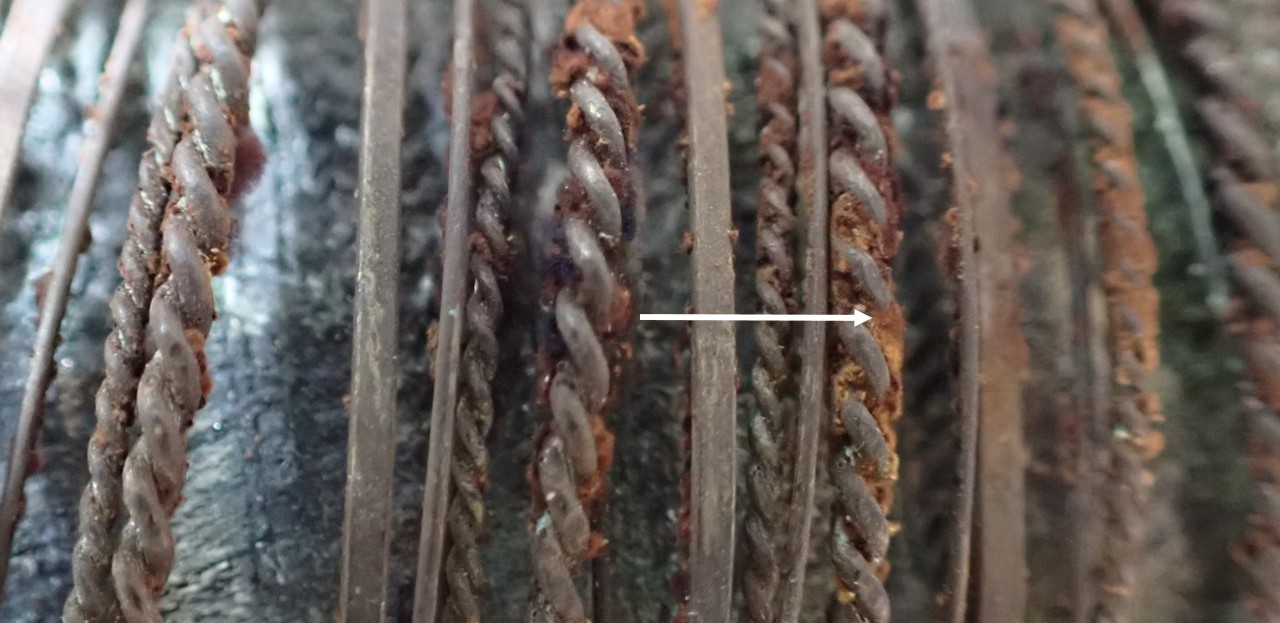 Credit Rijksmuseum Amsterdam, A.Hammond.
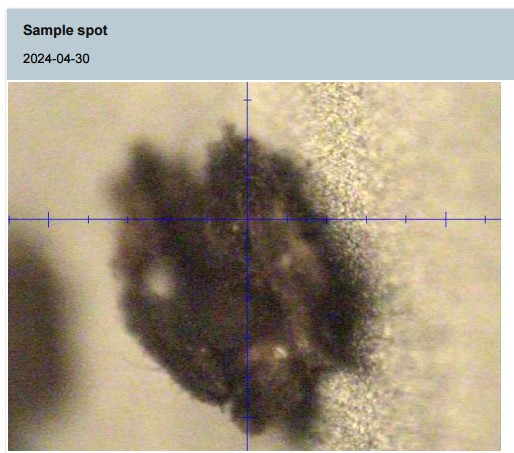
Sample of figs. 6 and 7 was collected from the surface of one of the twisted wires, in an area of thick corrosion, using a sterile scalpel blade. It was scraped from the surface of the object directly into a diveted slide, and was covered with a flat slide while being transported for X-ray diffraction.
Leaded Brass
Cast and rolled
2024-04-30 (XRD)
Rijksmuseum, Amsterdam, North Holland
Rijksdienst voor het Cultureel Erfgoed, Amsterdam, North Holland
Corrosion sampled in 2021 in order to identify corrosion product
None.
Analyses performed:
Non-invasive approaches
- Digital microscopy: Corrosion was analyzed using a Hirox digital microscope Model HRX-01.
- X-ray fluorescence: The corroded surface was analyzed through the use of an Olympus Delta X Professional X-ray fluorescence (XRF) spectrometer. Data was calibrated using CHARMed by PyMca, and was recorded by Ari Pappot (Rijksmuseum).
- SEM-EDX: The analysis was carried out without sampling. The analysis utilized a JEOL JSM-IT700HR scanning electron microscopy in combination with electron dispersive X-ray spectroscopy (SEM-EDX). This analysis was performed by Ineke Joosten (Rijksdienst voor het Cultureel Erfgoed).
Invasive approach
- X-ray Diffraction was carried out using a Bruker D8 Discover with a 2D VÅNTEC-500 detector with GADDS X-ray diffractometer (XRD). This analysis was performed by Luc Megens ((Rijksdienst voor het Cultureel Erfgoed).
The metal seems to be a leaded brass containing a small percentage of antimony (Sn and Ag). It is difficult at that stage to determine whether Fe is an additional element or just external pollution (Table 1).
| Element | Cu | Zn | Pb | Ag | SnK | Fe |
| Concentration (%) | 70.0 | 23.0 | 3.6 | 0.1 | <.1 | 3.0 |
Table 1. X-ray fluorescence results.
EDX analysis is provided below in the corrosion layers section.
X-ray fluorescence analysis indicated that the wire is a leaded brass, though this measurement was made on a corroded surface which may not be indicative of the composition of the alloy itself.
None
Cu
Zn, Pb
None.
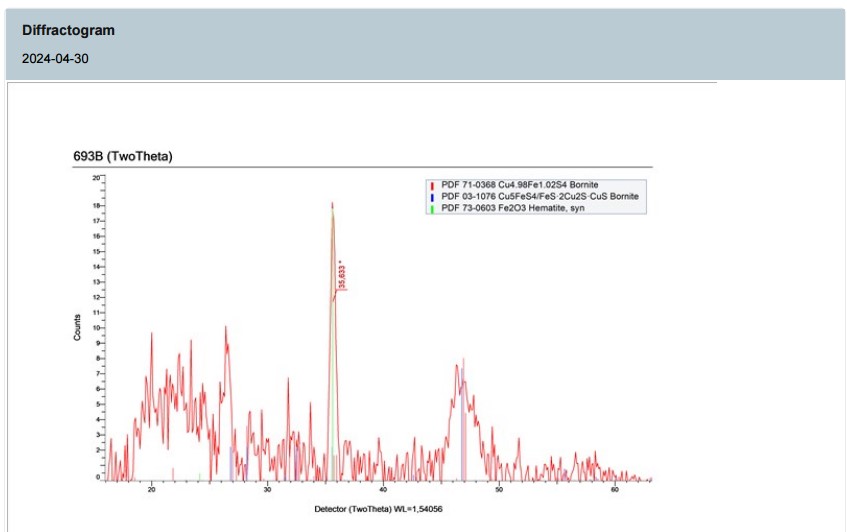
SEM-EDX observation and analysis of the brown fuzzies (Figs. 7 to 9) indicated major peaks of copper and sulfur with lower peaks of oxygen and carbon. XRD diffractograms of brown fuzzies (Fig. 7) matched with copper iron sulfide Bornite, iron oxide Hematite and copper sulfides Covellite CuS and Haycockite CuFe5S8, the latter might be the most probable due to the absence of iron in EDX analysis (Fig. 10).
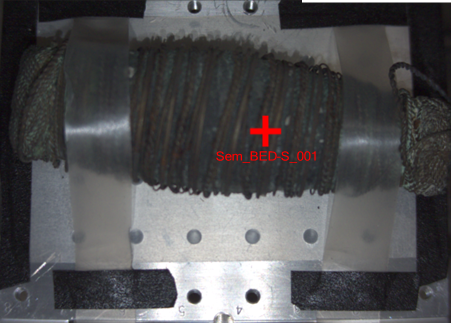 Credit Rijksdienst voor het Cultureel Erfgoed, I.Joosten.
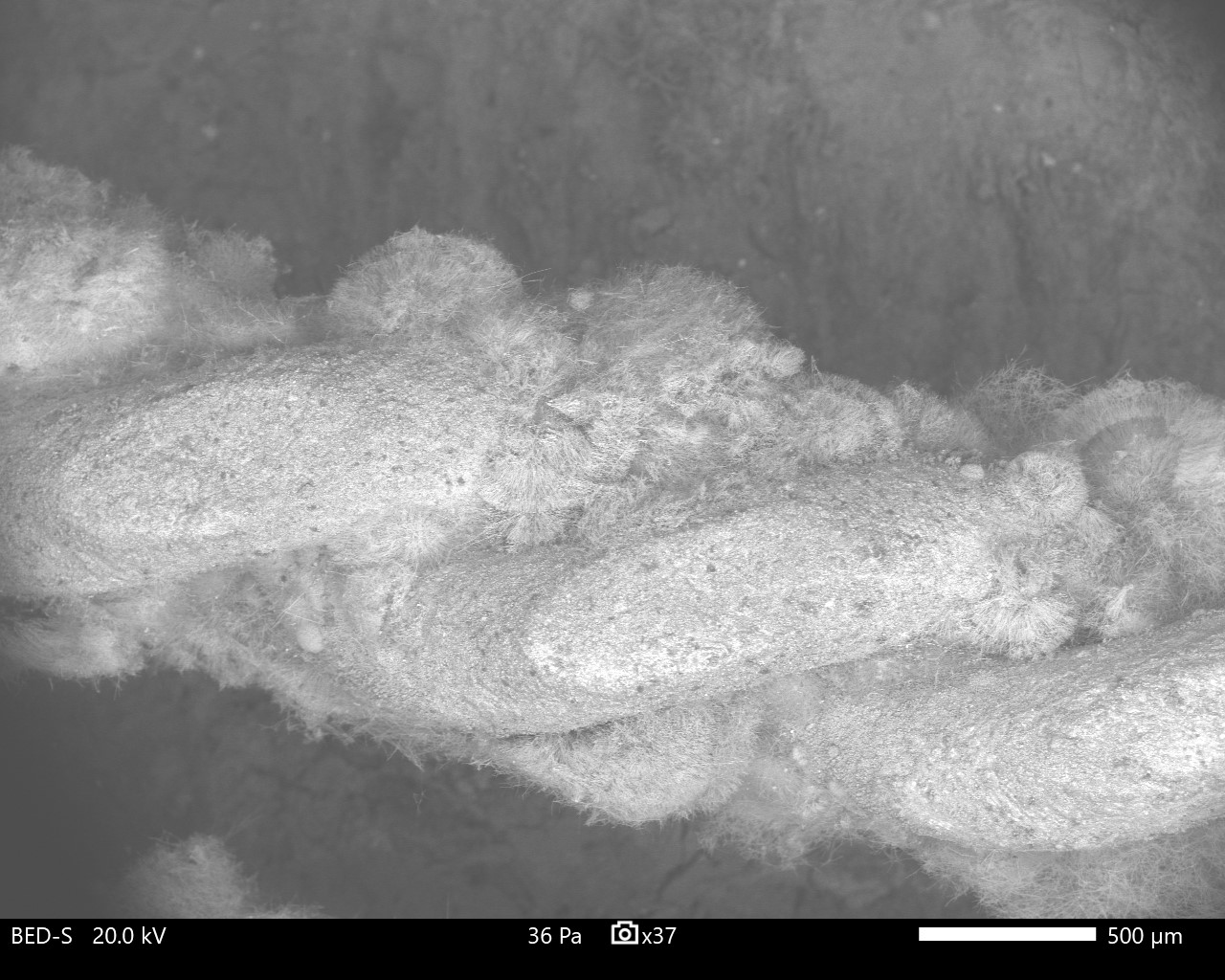 Credit Rijksdienst voor het Cultureel Erfgoed. Image and analysis by Ineke Joosten.
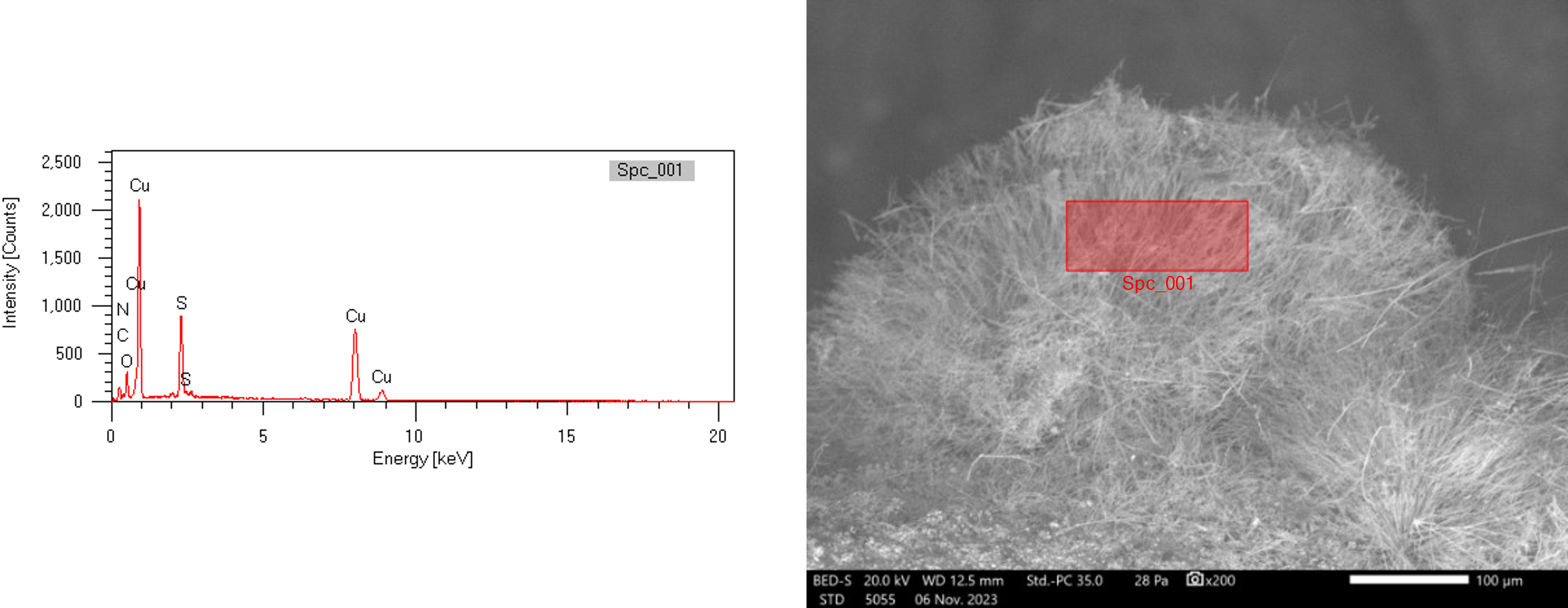 Credit Rijksdienst voor het Cultureel Erfgoed, I.Joosten.
Bushes, branches, or cauliflours
Copper sulfide corrosion
None.
None.
This object is afflicted by corrosion known by a few names such as black spots, brown fuzzies, and copper (iron) sulfides, this process is known to cause pitting in copper alloys (Eggert 2023[4]). First published on in 1977 by Brinch-Masden, this process has been studied since, and has been described both as "high in sulphur and unpleasant to look at" and as an “enemy of copper” causing pitting corrosion on metallic substrates (Eggert 2023[4]).
References on objects and samples:
1. Hammond A. and Davidowitz T. (2003) Keeping an eye on copper alloys: The VITAL Cu diagnostic protocol for identifying corrosion on cupreous shipwreck finds. ISCUA ’23 Conservation: Proceedings for the International Symposium of Conservation for Underwater Archaeology, Formentera, Spain, Spanish Ministry of Culture, pp. 113-130.
2. Hammond A., Davidowitz T. and Joosten I. (2025) Understanding corrosion through visual examination: VITAL Cu in practice, Metal 2025, proceedings of the ICOM-CC Metal WG Interim Meeting, Cardiff, Wales, Cardiff Studies in Archaeology and Conservation, pp. 368-374.
3. Gawronski J. (1998) Hollandia, in J. Delgado (ed.), Encyclopedia of underwater and maritime archaeology, New Haven, Connecticut, Yale University Press, pp. 196-197, 329.
4. Eggert G. (2023). Copper and bronze in art and the Search for rare corrosion products, Heritage, vol. 6, no. 2, pp. 1768–1784.
Suggested reading:
5. MacLeod I.D. (1991) Identification of corrosion products on non-ferrous metal artifacts recovered from shipwrecks, Studies in Conservation, vol. 36, no. 4, pp. 222–234.
6. Weichert M., Eggert G., Jones A.M. and Ankersmit H.A. (2004) Trees, bunches, cauliflowers–A closer look at sulphurous corrosion on copper alloys and minerals (‘Black Spots’), Metal 2004, proceeings of the ICOM-CC Metal WG Interim meeting, Canberra, Australia, National Museum of Australia, Canberra, pp. 149–159.