Ladle with cockerel IIb 4016
Claire. Foessel (HE-Arc CR, Neuchâtel, Neuchâtel, Switzerland)
 Credit HE-Arc CR, C.Foessel.
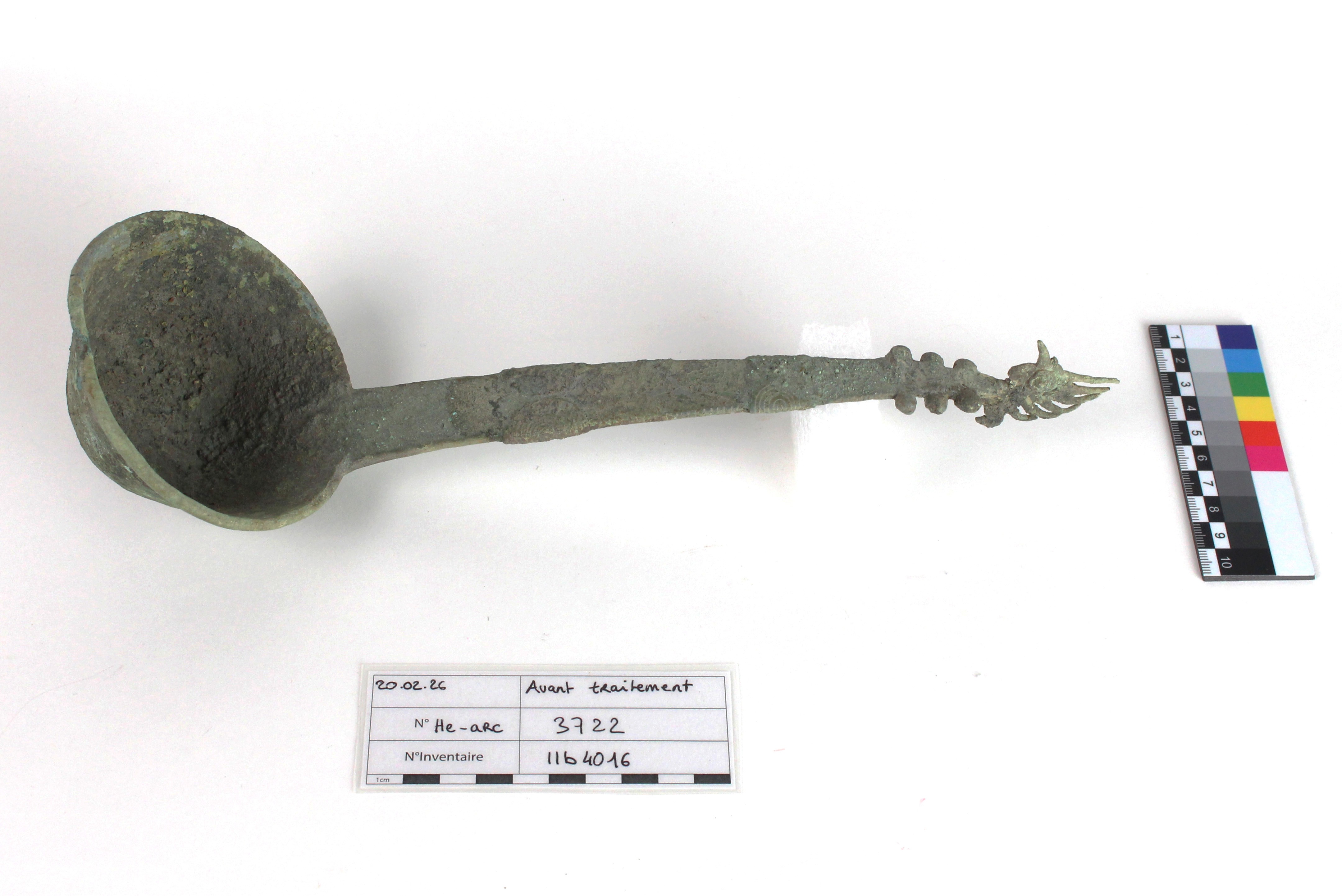
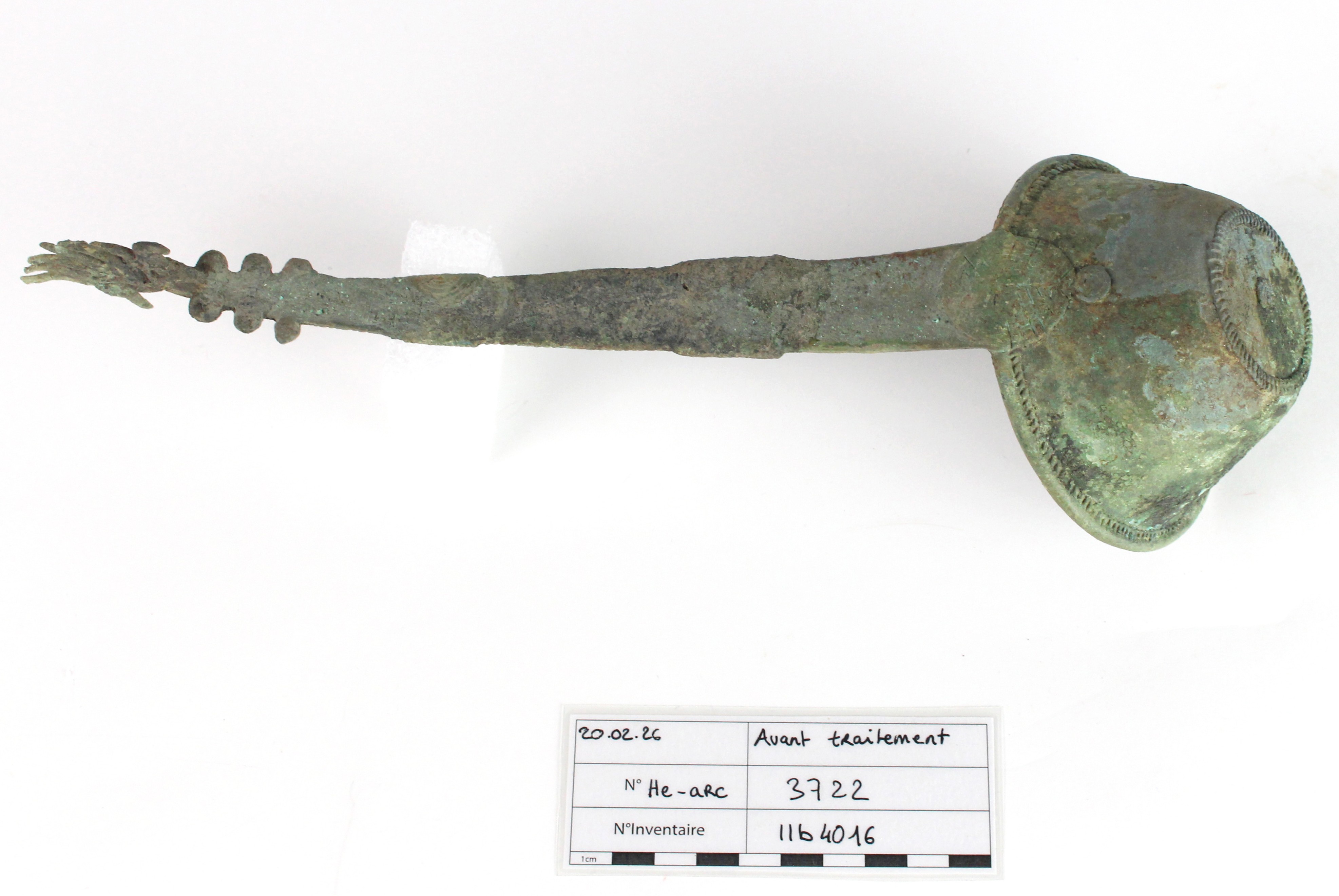
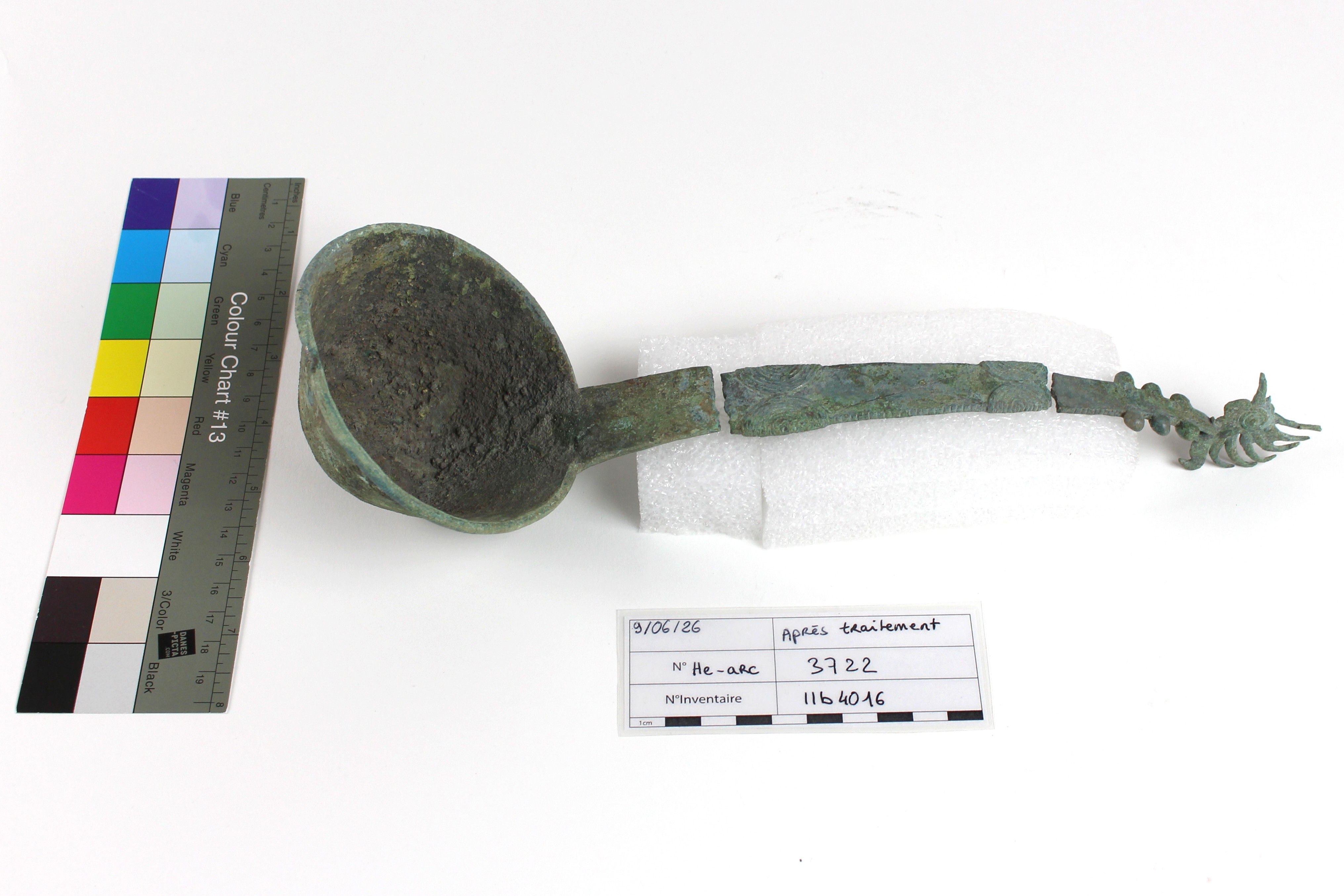
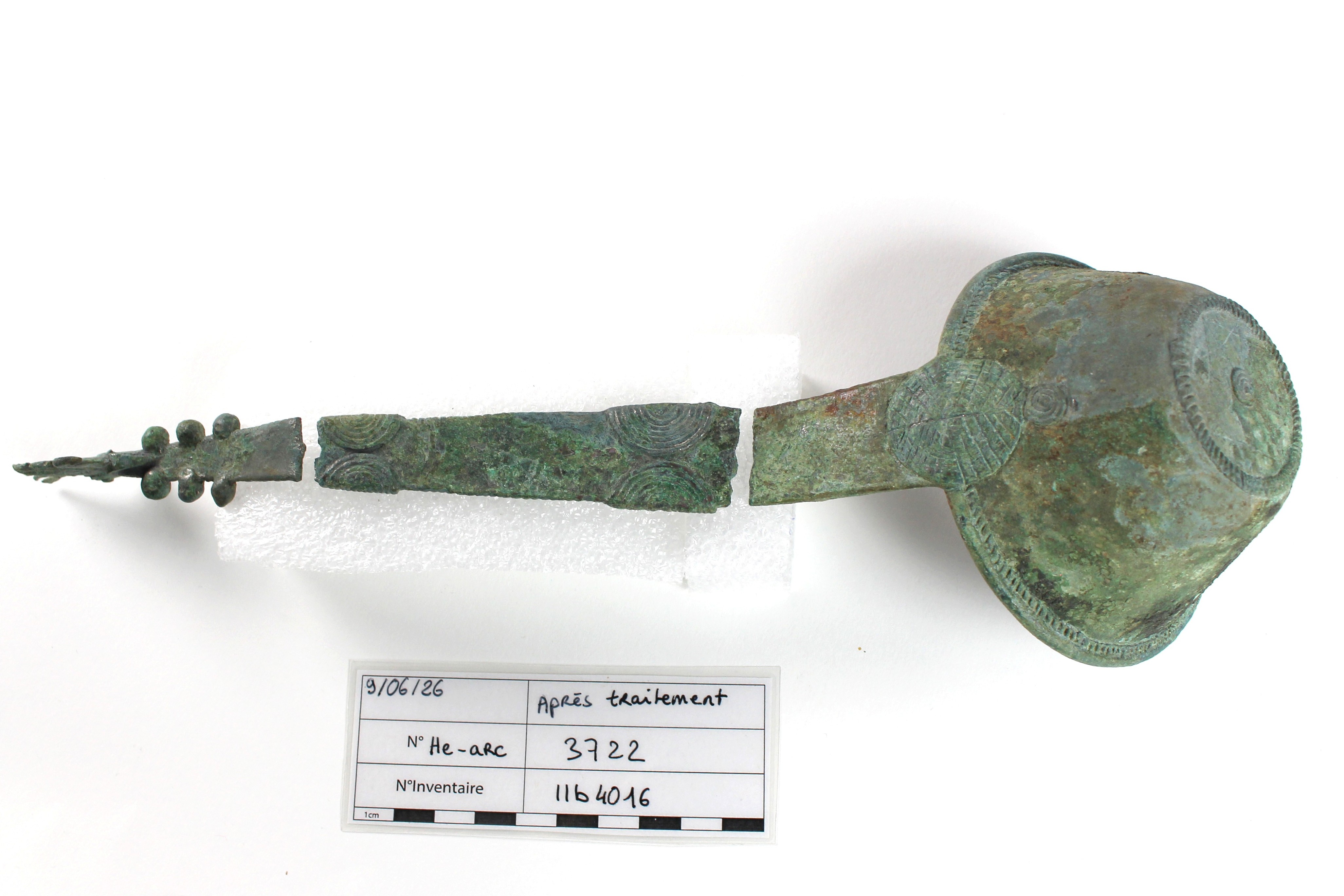
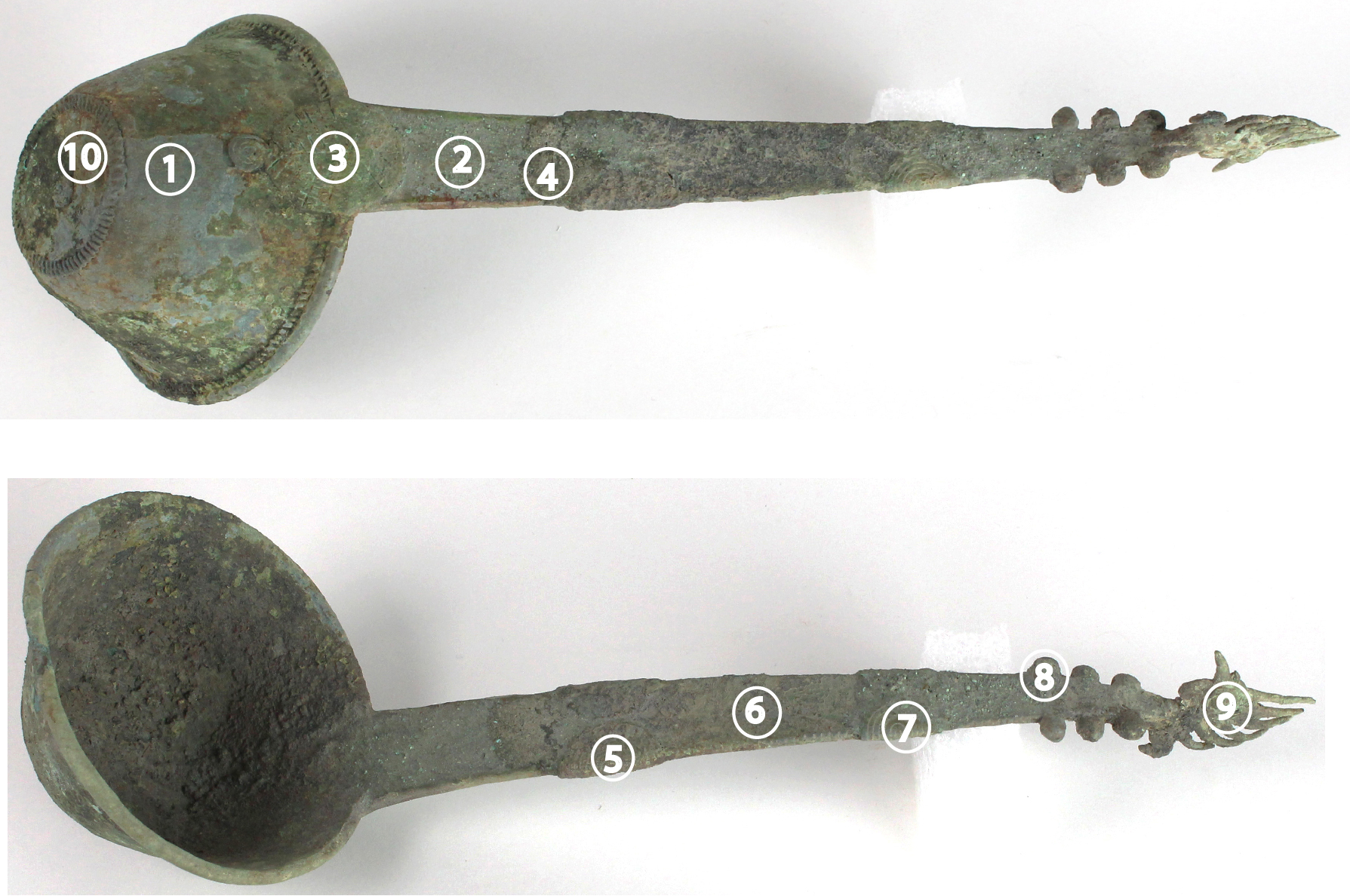
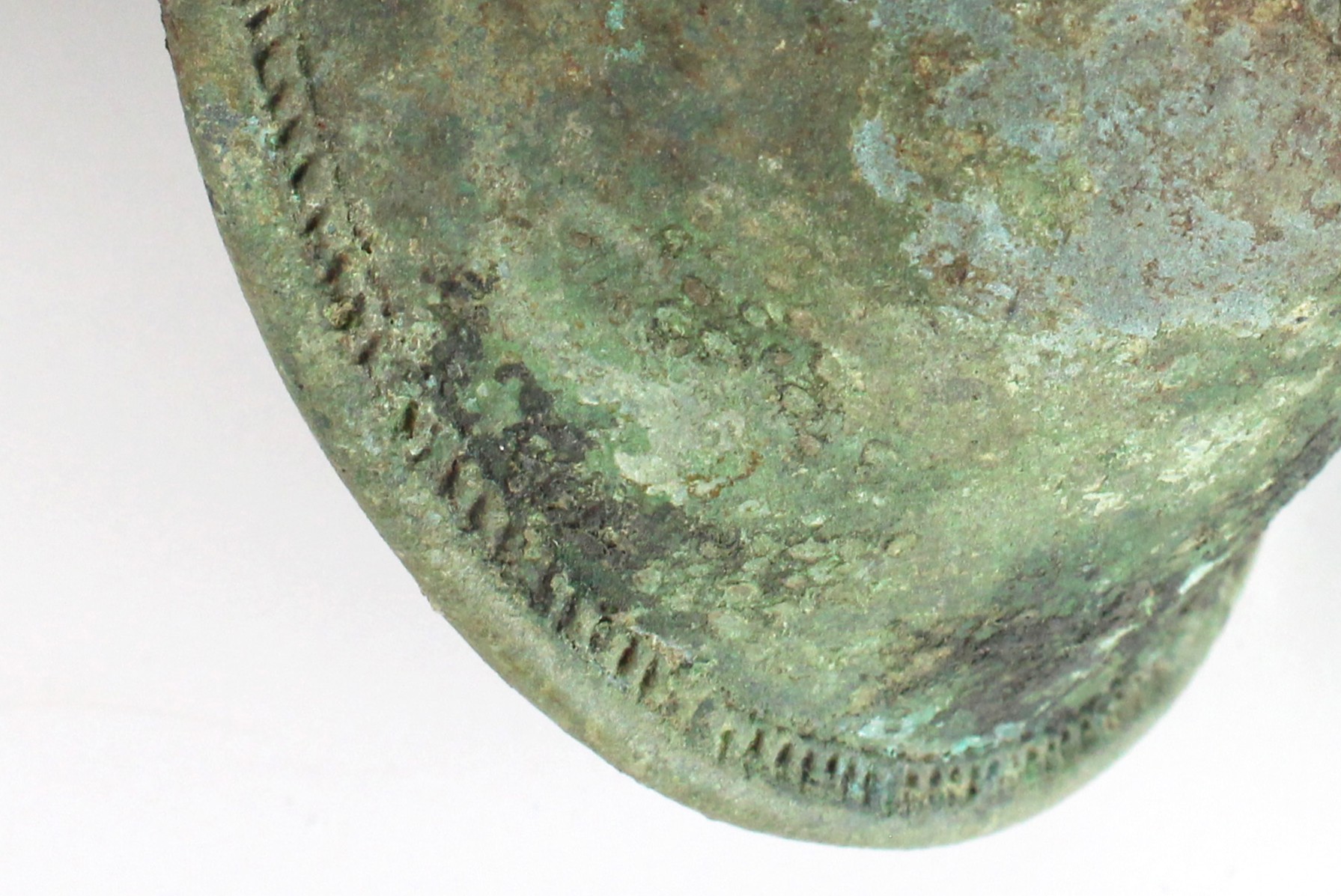
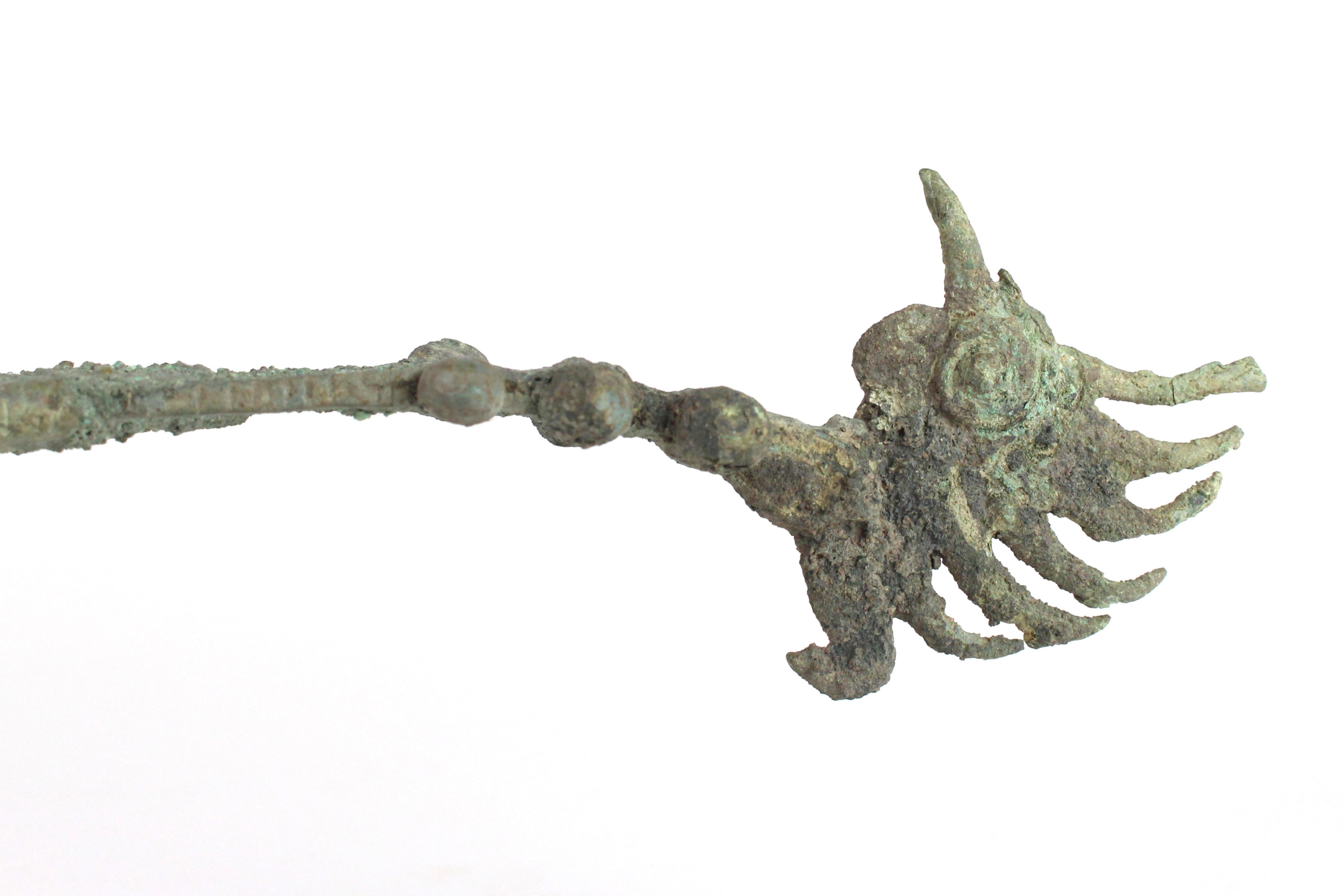
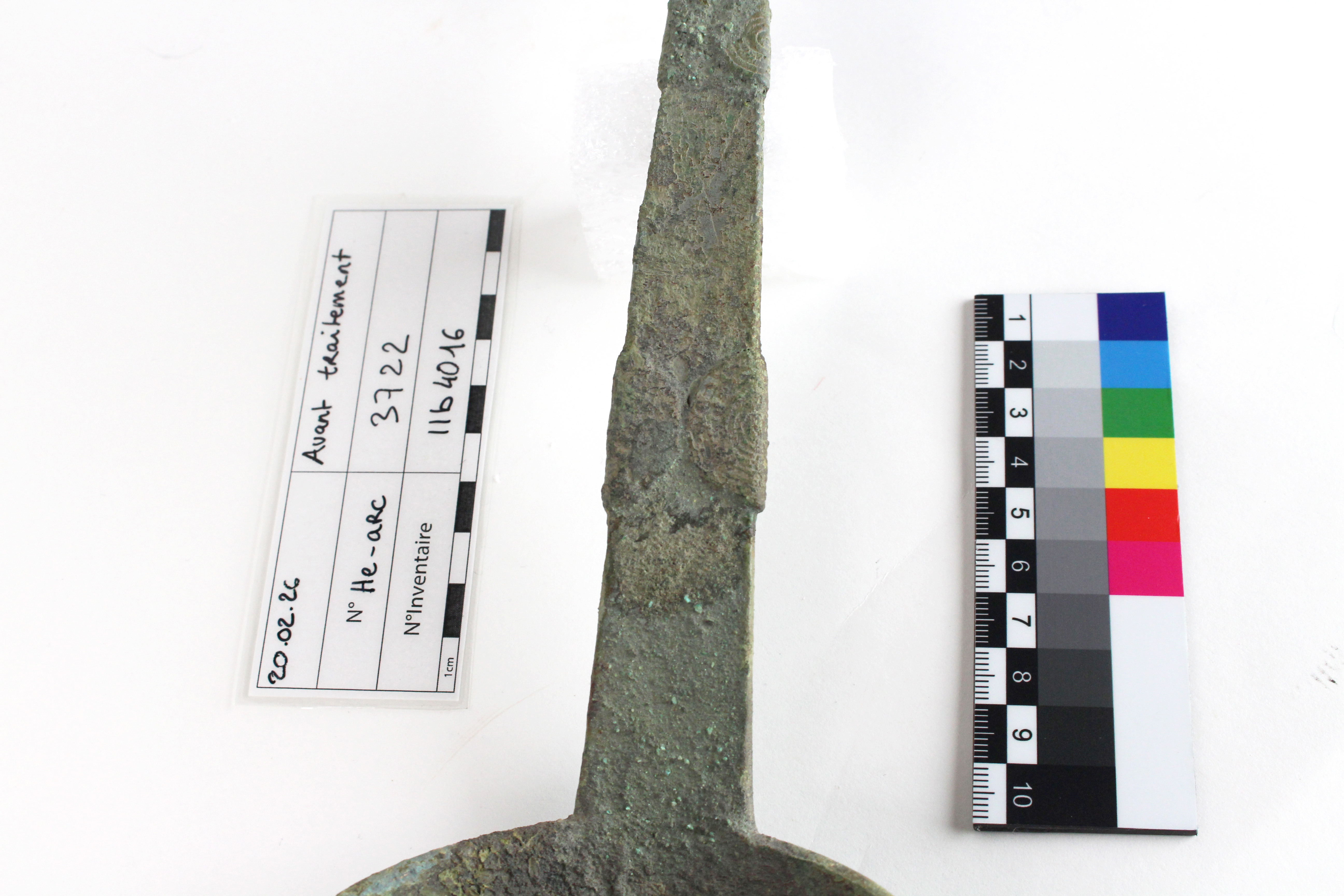
Ladle with long, slightly curved handle topped with a rooster and ending in a round bowl. It is covered with green corrosion products mixed with sediment (Figs. 1 and 2). The handle features decorative ornamentation and has two breaks (Figs. 4 and 5). Dimensions: Length = 30cm, bowl diameter = 10.6cm.
Ladle
Ban Chiang archaeological site, Udon Thani, Changwat Udon Thani, Thailand
Date unknown
Late Bronze Age
The proposed time frame is an estimate
Soil
Museum der Kulturen, Basel
Museum der Kulturen, Basel
IIb 4016
N/A
There is no information available regarding the archaeological context. In 2008, Elsbeth Walder-Bachmann donated this object to the museum. Previously, the object was likely on the post-excavation art market. The fractures are old and were repaired with an adhesive mixed with corrosion products and pigments.
The object was made using the lost-wax casting technique. This technique allowed for the creation of highly detailed decorations.
 Credit HE-Arc CR, C.Foessel.
 Credit HE-Arc CR, C.Foessel.
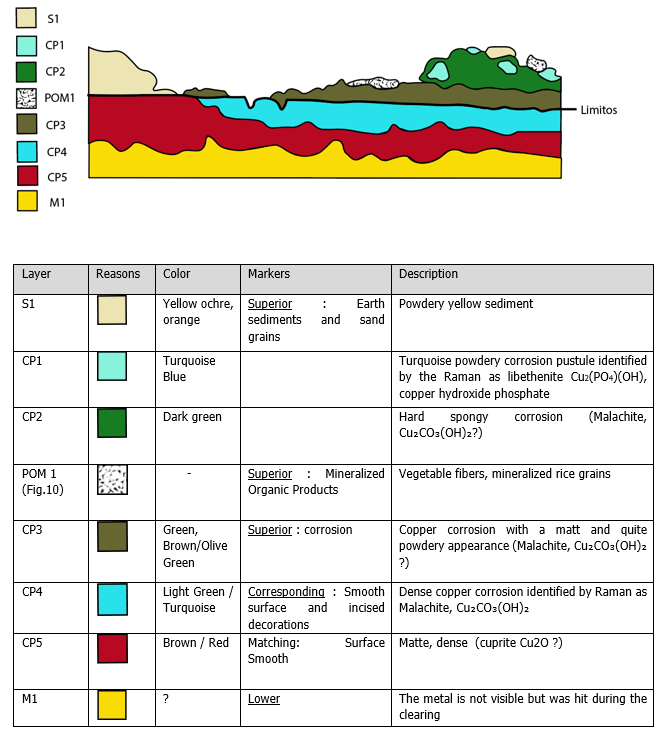
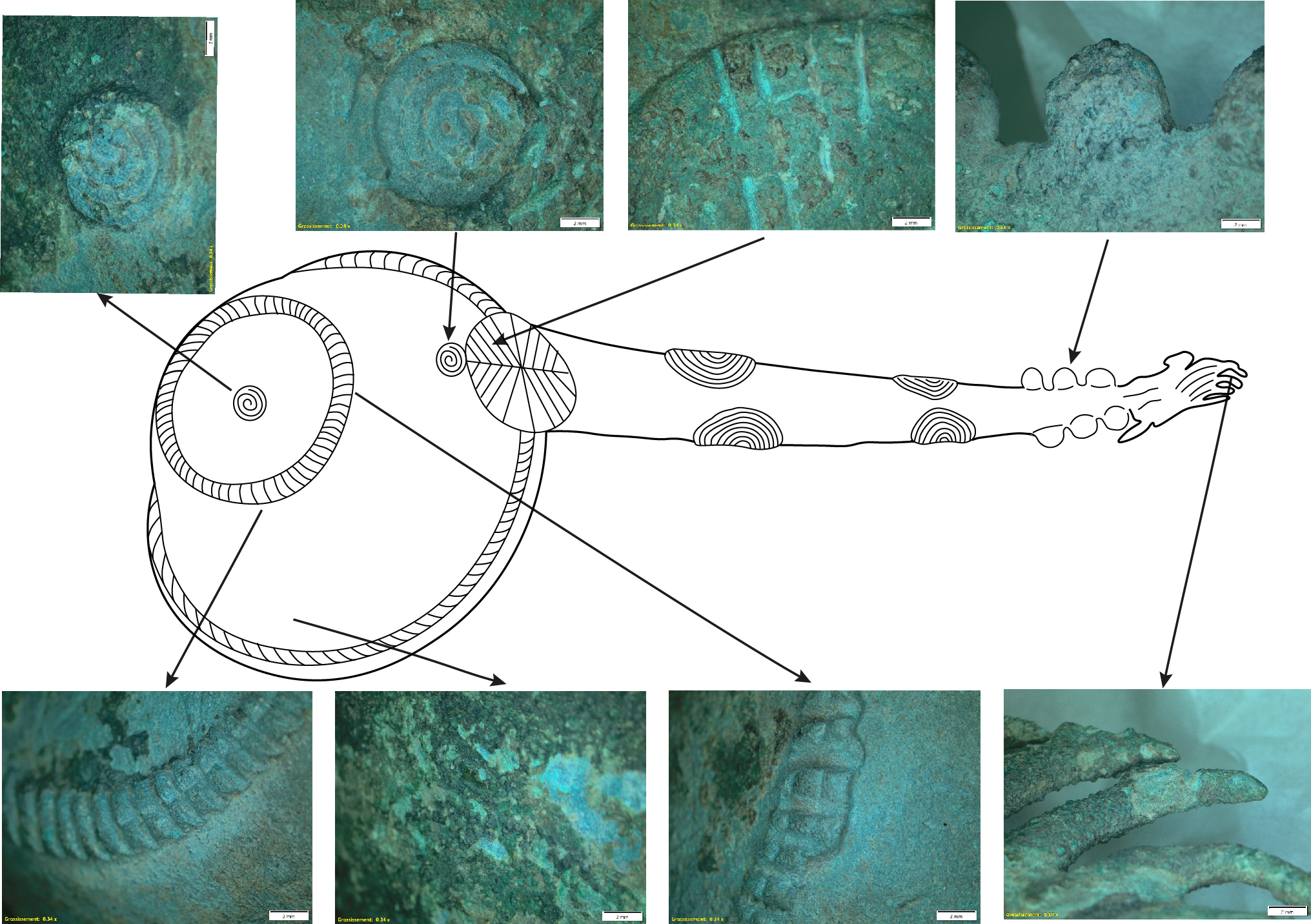
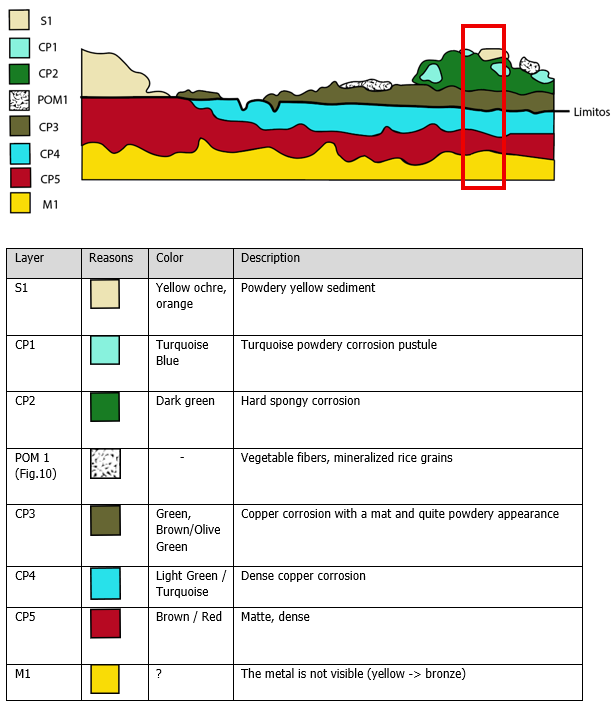
The schematic diagram below provides an overview of the corrosion layers observed on the ladle following an initial examination under a binocular microscope.
 Credit HE-Arc CR, C.Foessel.
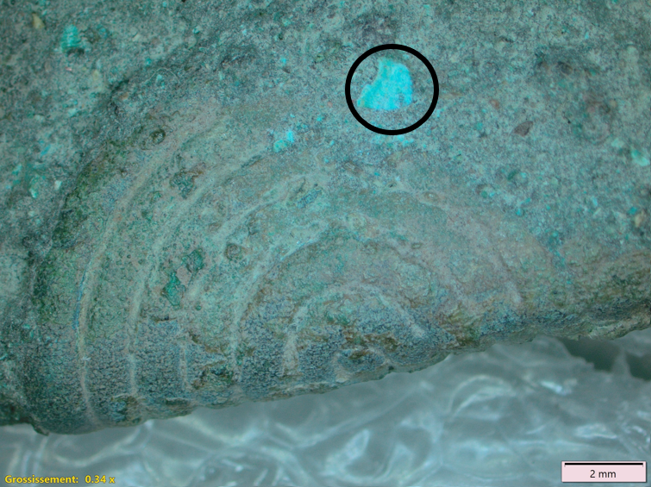
Only one sample (Sample 1) was taken. It corresponds to the powdery turquoise-blue corrosion product found on the handle of the ladle, near a semicircular decoration.
Leaded Bronze
casting and cold working
1
None
None
18.03.2026, chemical analysis
None.
Analyses performed:
Non-invasive approach
- XRF with handheld portable X-ray fluorescence spectrometer (NITON XL5). General Metal mode, acquisition time 60s (filters: Li20/Lo20/M20).
- X-radiography (142 kV, 5 mA, 40s, d = 100cm).
- Raman (spectral range 54-1633cm-1).
Invasive approach
- Scanning electron microscopy /Energy Dispersive X-ray Spectrometry (SEM-EDS) on sample 1. Analysis was performed with a Jeol JSM-6400 device, 20,0 kV, x5k.
- Raman (spectral range 633-1800cm-1, 10mW, 5 accumulations of 20s, objective x50).
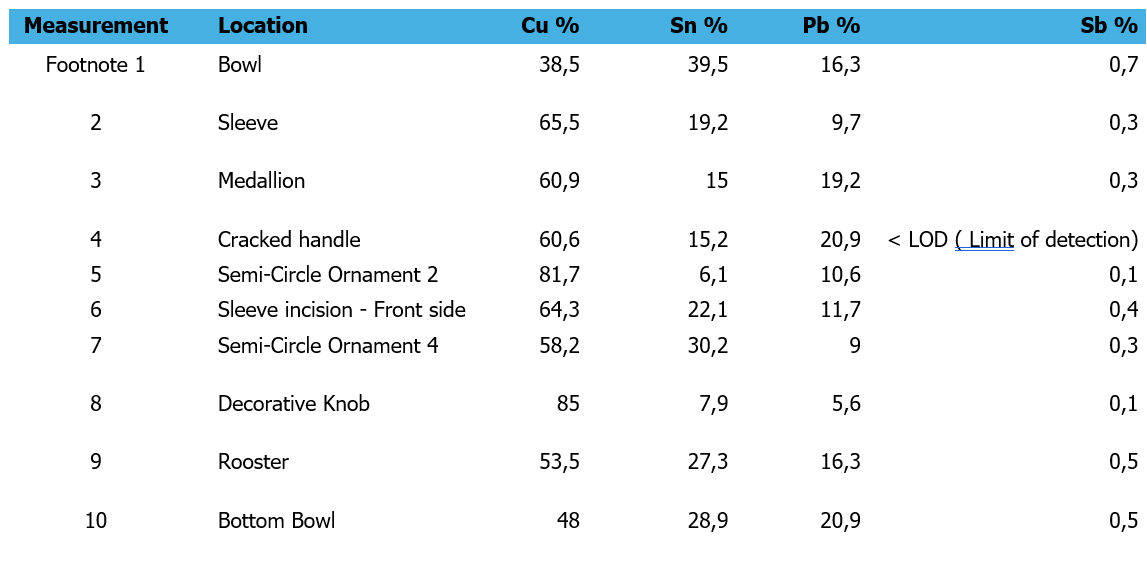
Ten zones were analysed with XRF (Fig. 8). Fig. 13 gives the details of the results. The metal is a leaded bronze containing a small percentage of antimony (Sb). Table 1 is summarising them.
| Elements | Cu | Sn | Pb | Sb |
| Mass % | 38.5 - 85 | 6 - 39.5 | 5.5 - 21 | <1 |
Table 1: Chemical composition of the metal. Method of analysis: HE-Arc portable XRF.
Except for the ornementation, the concentrations of tin (Sn) and lead (pb) are high (Sn>15% and Pb>10%).
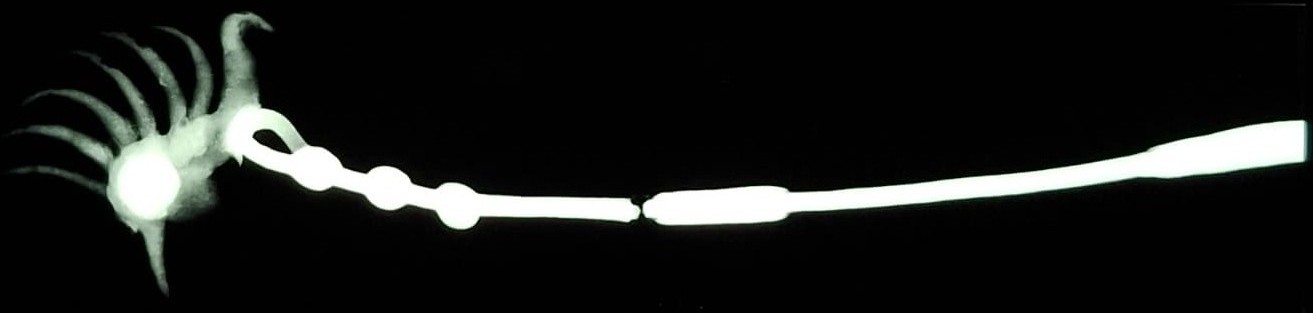
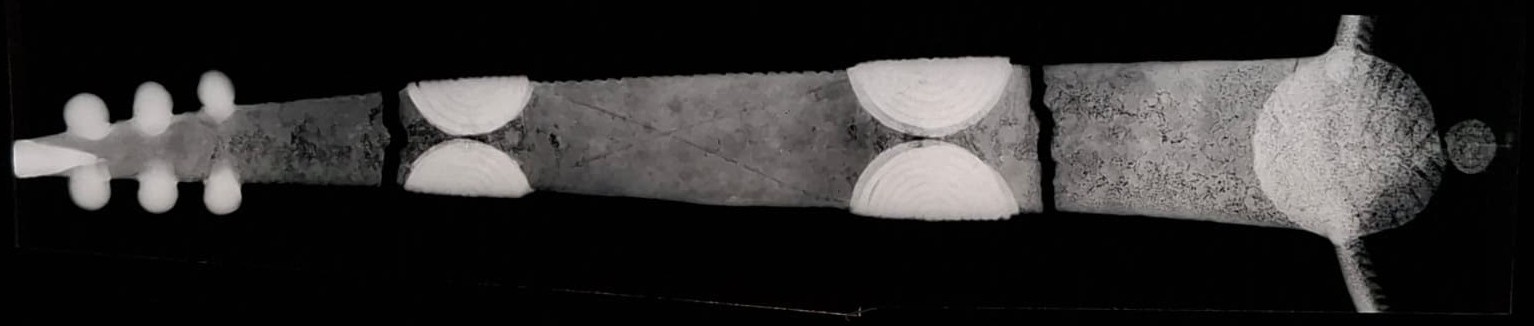
X-radiography image revealed two fractures on the ladle’s handle. These fractures, covered with adhesive and pigments/corrosion products, indicate that the object has undergone a previous restoration. The decorative motifs are also clearly visible, and the porosity suggests that the object was cast (Fig. 14). At the end of the handle, a loop beneath the rooster is visible (Fig. 15), although it is filled with corrosion products when viewed in visible light (Fig. 6).
 Credit HKB, K.Wyss Heeb.
The metal itself has not been analysed. By questioning MiCorr database based on the MiCorr stratigraphy of Fig. 11, we found a similar object in the database: bracelet with dragonflies IIb 4025.01 coming from the same archaeological site, which core composition is in the range of the compositon indicated in table 1.
Unknown
Cu
Sn, Pb
As the object was presumably produced using the lost-wax casting process (cast metal), a dendritic microstructure is to be expected, similar to that of the metal in bracelet IIb 4025.01.
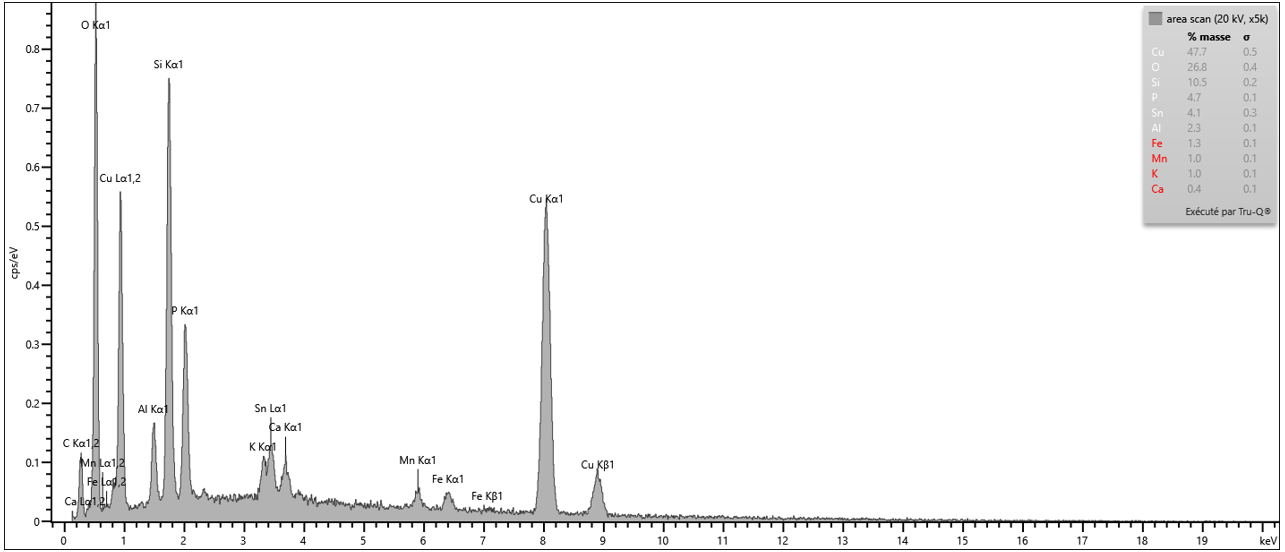
The turquoise-blue sample (Fig. 12) was analyzed using SEM-EDS, which identified the following significant elements: copper, tin, magnesium, and phosphorus (Fig. 16).
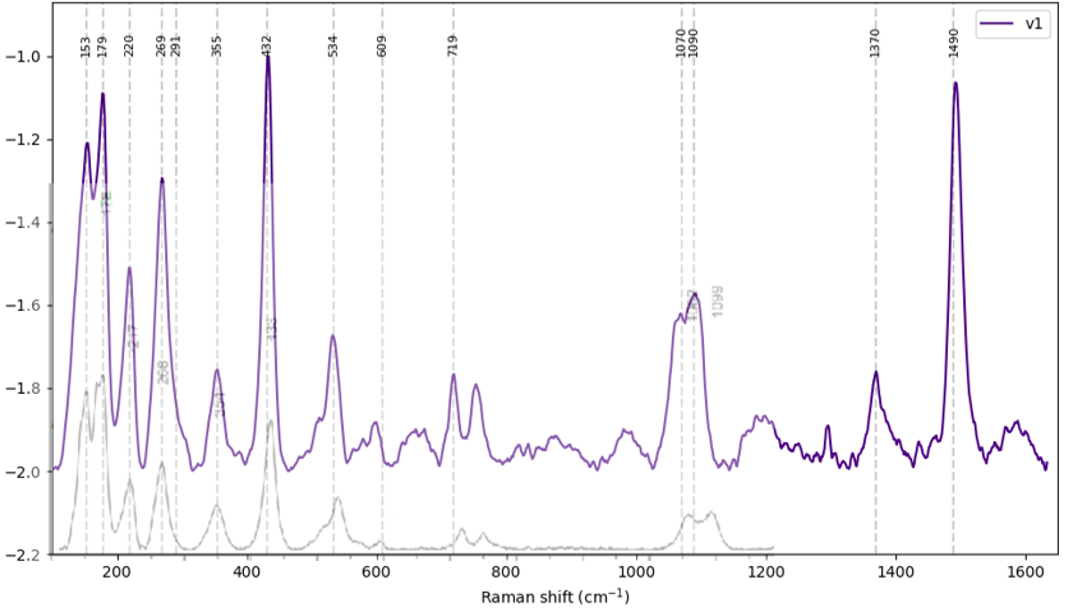
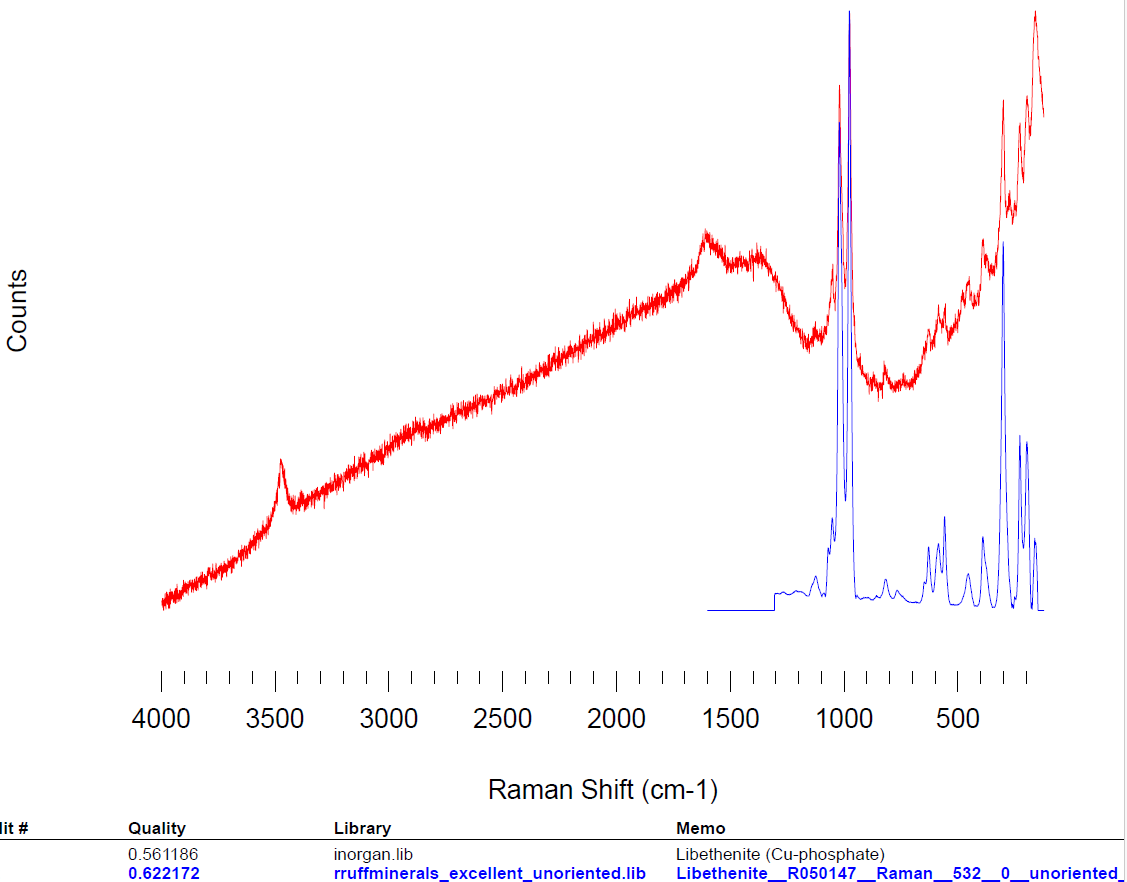
Raman spectroscopy performed on this sample revealed the presence of copper hydroxide phosphate, identified as libethene (Cu₂(OH)(PO₄)) (Fig. 17). The presence of phosphates on buried metals often indicates the proximity of a burial site, as the decomposition of bones releases phosphorus. This marker, which is also associated with cremation sites and arid climates, supports the hypothesis that the ladle is a funerary object. Similar results were obtained for bracelet IIb 4025.01.
Malachite was also identified on the medallion of the ladle (Fig.18) using Raman spectroscopy.
 Credit HKB, N.Scherrer.
Passive
Mostly type I with locally type II (Robbiola)
None.
All information concerning corrosion products is shown in the final stratigraphic profile (Fig. 19).
The boundary of the original surface (limitos) lies at the interface between the CP4/CP5 layers and the CP3 layer. However, the pseudomorphs of organic matter (POM) have been preserved. In particular, impressions of rice grains were identifiable.
The ladle is a leaded bronze containing small amount of antimony. The object was probably cast using the lost-wax technique. The analysis of corrosion products has provided insight into the nature of the object (funeral?) and the context in which it was buried (burial site?), and the mechanisms of its deterioration by comparison to an object from the same archaeological site, from MiCorr database (bracelet IIb 4025.01). No active corrosion was identified.
References on object and analytical methods
Reference on object
1. MiCorr_Bracelet IIb 4025.01
2. Higham C., Higham T., Ciarla R., Douka K., Rispoli A., Rispoli K., and Rispoli F. (2011), The Origins of the Bronze Age of Southeast Asia. Springer Science+Business Media.
3. White J.C. (2006) Dating Early bronze at Ban Chiang Thailand. In From Home erectus to the living traditions: Ühoice of Papers from the 11th International Conference of the European Association of Southeast Asian Archaeologists, Ûougon, 25th-29th September 2006, édité par Pautreau, J.-P, … [et al.], pp. 91-104.
4. White J.C. and and Hamilton E.G. (2019) Ban Chiang, Northeast Thailand, Volume 2B: Metals and Related Evidence from Ban Chiang, Ban Tong, Ban Phak Top, and Don Klang. Philadelphia : University Museum Publications.
Reference analytical methods
5. Scott D.A. (2003) Copper and bronze in art: corrosion, colorants, conservation. Getty Publications, Los Angeles.